Three Rounds. One Lesson. What Boxing Teaches Us About Tolerance.
August 16, 2026 🥊 The Fight in Front of You

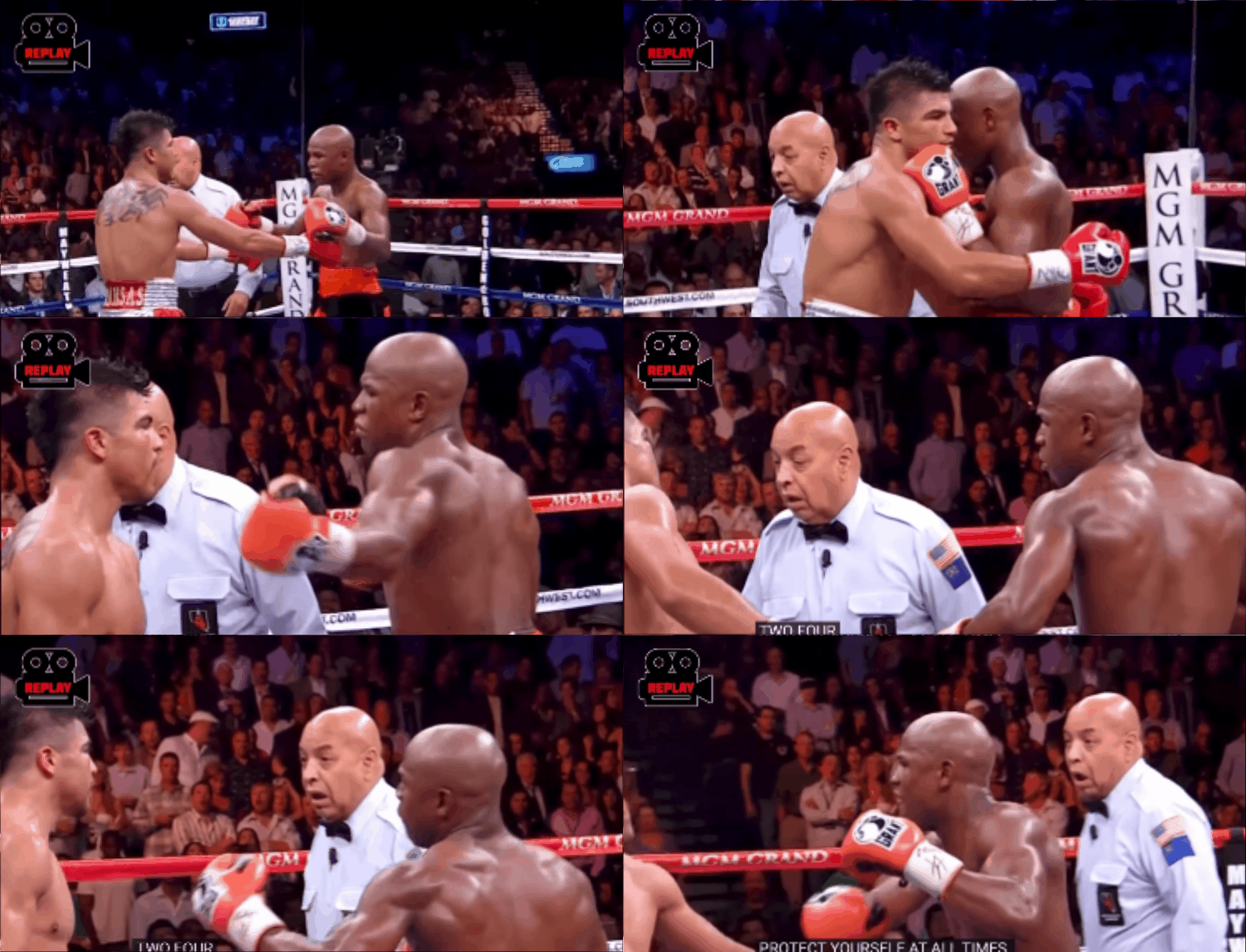
In boxing, you learn something early: good sportsmanship and being nice are not the same thing. Being nice is managing how someone feels. Good sportsmanship is seeing the situation for what it is. The best coaches, the best partners, the best fighters — they know the difference. And so did Karl Popper.
In 1945, Popper articulated what he called the Paradox of Tolerance: a society that extends unlimited tolerance will eventually have that tolerance destroyed by those who are intolerant. The solution isn't to become intolerant. It's to be accurate — to read what's actually in front of you, not what you wish were there.
Boxing teaches that in three rounds.
Round 1: The Equal You're Being Too Nice To
You're matched with someone at your level. Same skill, same experience, same capability. And you hold back — not because you're protecting them, but because you want to be kind. You ease off. You give ground you didn't need to give.
They don't. They read your hesitation and they use it.
This isn't their betrayal. This is your misread. You extended consideration to a situation that didn't call for it, and you paid for it.
Popper saw this in open societies. The tolerant extend good faith to everyone — including those who have no intention of returning it. The intolerant don't hesitate. They move into the space that hesitation creates. The tolerant party wasn't wrong to be generous by nature. They were wrong to apply it without reading the room.
Tolerance without discernment isn't virtue. It's just an opening.
Round 2: The Hand That Gets Bitten
Now the dynamic shifts. You're the more experienced fighter, working with someone still developing. You pull your shots. You create space. You give the other fighter a chance to learn, to try things, to build. That restraint is a gift— and both people in the ring know it.
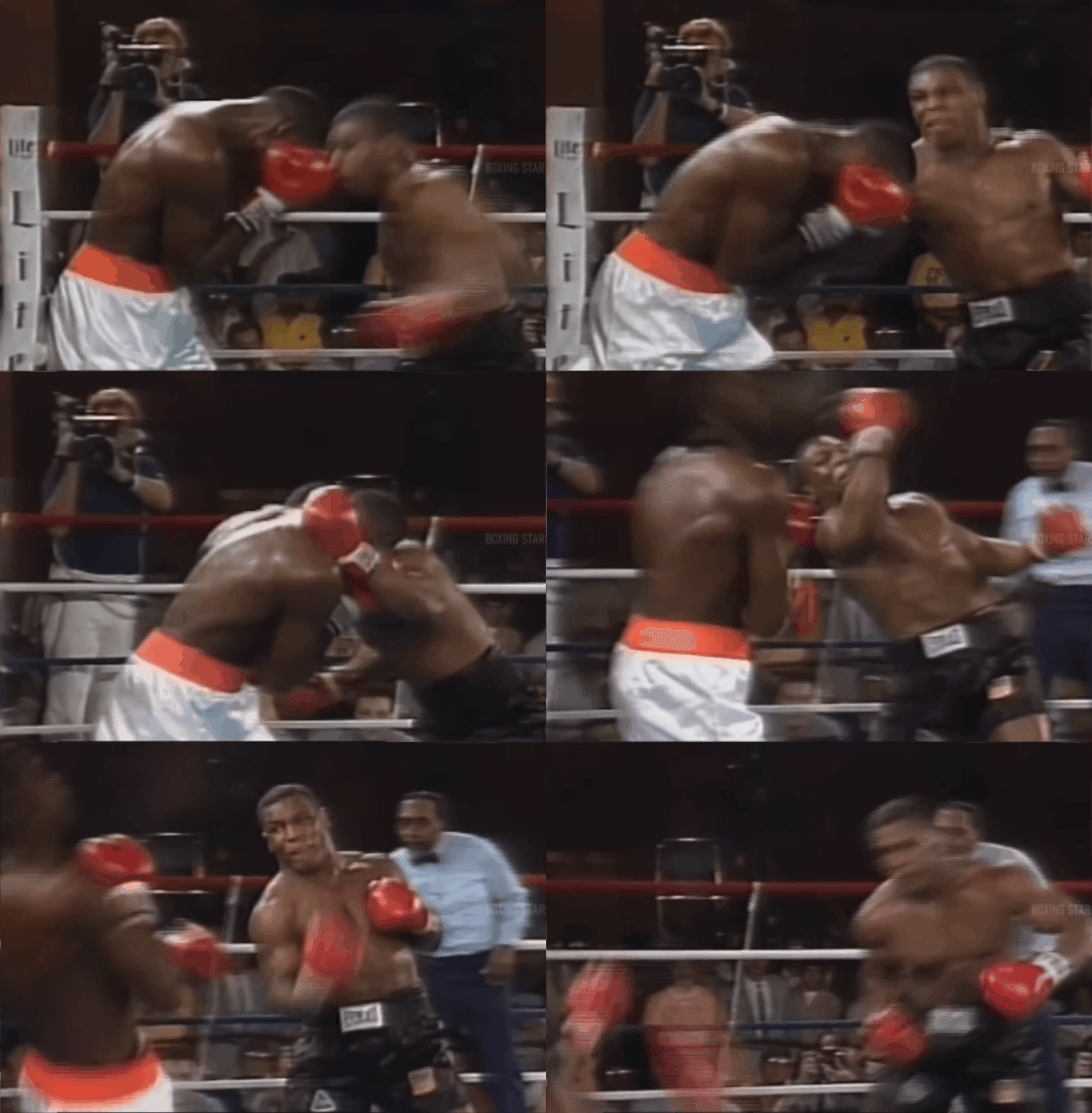
When the less skilled fighter uses that gift as an opportunity to go for the kill— when they try to take the other fighter’s head off— they haven’t found an edge. They’ve broken a covenant. They’ve mistaken generosity for weakness. And in doing so, they’ve shown exactly who they are.
And most experienced fighters know exactly what happens next. They stop holding back. They hit back hard. Not out of anger. Not of our cruelty. Not out of ego. But because the covenant has been broken, and the only honest response is to let them feel what full presence actually looks like.
Popper is unambiguous about this. A tolerant society is not a defenseless one. When what you extended in good faith is turned against the very thing that offered it, the society has not just the right — but the responsibility — to respond. Withdrawing that protection isn't cruelty. It's accuracy. You don't owe someone a shield they've turned into a sword.
Round 3: The One You Didn't See Coming
This is the hardest round. Not because it's the most violent — but because the failure here is the most human.
You've been working with someone for a long time. You knew them when they were new — uncertain, not yet capable of real challenge. A student, maybe. A sparring partner you'd watched develop from their first day in the gym. You extended trust and space and patience because that was the honest read at the time. It was right. It was generous. It was exactly what the situation called for.
But time passed. They grew. The gap closed — or reversed entirely — and somewhere along the way, you stopped updating your perception. You kept responding to who they were, not who they'd become. You kept offering a protection they no longer needed, inside a dynamic that no longer existed.
And that's when a habit held past its usefulness stops being generosity. It becomes blindness.
Because inside the freedom you kept extending — the freedom that was reasonable when you first extended it — something changed. The capability grew. The intent shifted. And you missed it, not because you were careless, but because your original good faith hardened into assumption. You stopped reading the room. You read the memory instead.
Popper understood that tolerance cannot be static. What was a reasonable extension of good faith at one moment can become something you need to reckon with at another — if the freedom you offered is being used against its source. The most dangerous version of this isn't the threat that announces itself. It's the one that was genuinely welcome once, that grew inside the space you gave it, and that you kept seeing as small long after it had stopped being so.
The failure isn't that you were generous. The failure is that you stopped looking.
The Fight in Front of You
All three rounds come down to the same thing: the gap between who someone is and who you think they are.
In Round 1, you softened against an equal and gave away ground for nothing.
In Round 2, you kept protecting someone who was using that protection against you.
In Round 3, you kept seeing someone small who had long since grown into something you needed to reckon with.
The failure isn't generosity. Generosity is good. The failure is refusing to update — holding a fixed idea of someone while reality moves on without you.
In boxing, you fight the opponent in front of you — not the one you make up in your head.
Popper would say same thing.