Why Life Doesn't Care About Your Combination
June 1, 2026 🥊 Planning for the Human


There is a concept in military strategy known as Commander’s Intent. It is a broad, clear definition of what a successful mission looks like in its end state. Crucially, it does not give hyper-specific, step-by-step instructions. Why? Because war is chaotic, fast-moving, and entirely unpredictable. Instead of a rigid blueprint, it provides a core compass. It accounts for unpredictability, saving time and delivering results because the people on the ground have the freedom to adapt to the reality in front of them.
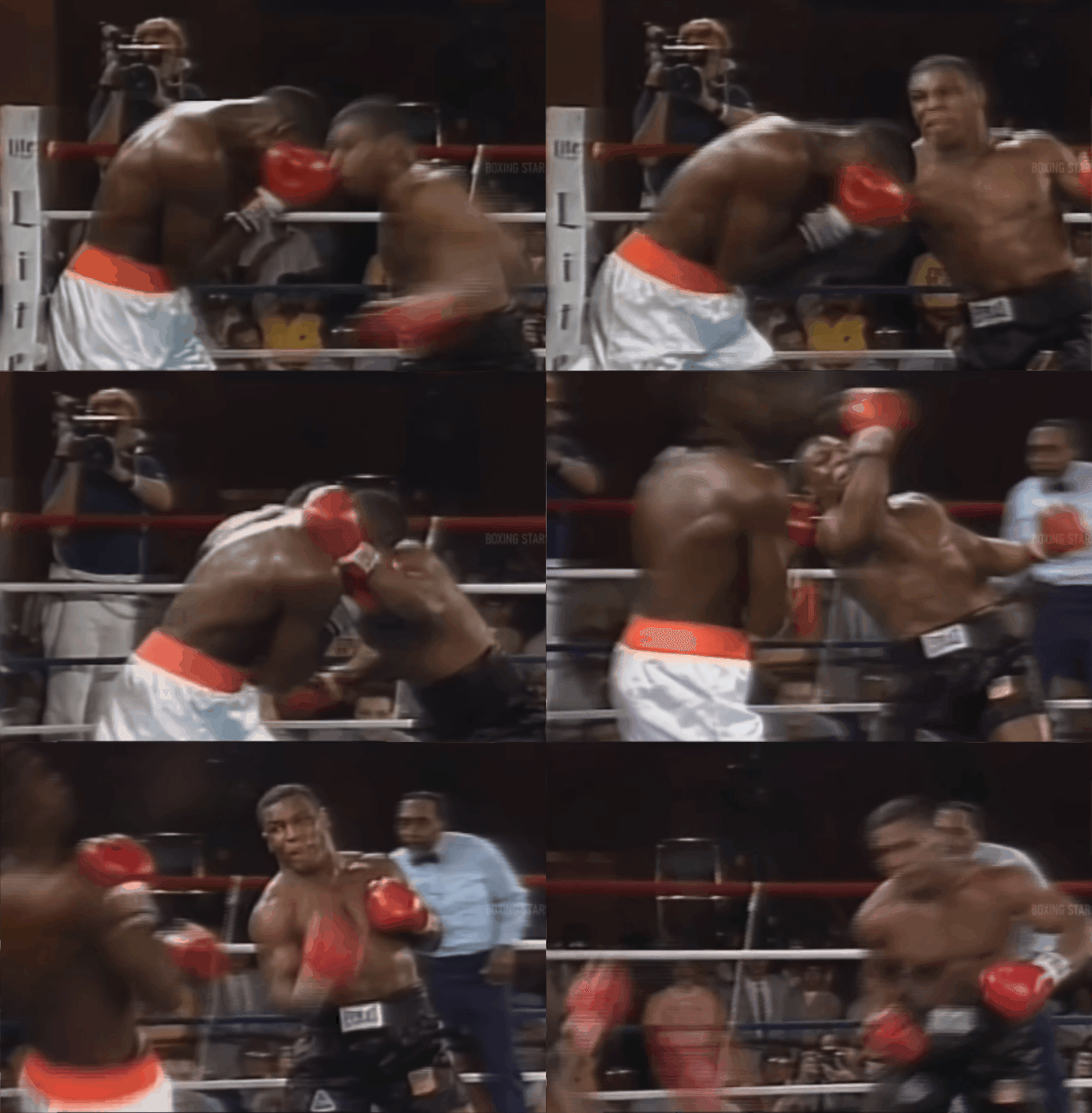
Mike Tyson famously captured the breakdown of rigid planning in his own way: “Everyone has a plan until they get hit in the face.” While you can interpret that as the emotional and physical shock of taking a punch, the deeper strategic message is identical to Commander's Intent: Overly specific plans are useless the moment reality pushes back.
The Trap of the Tape
In the fitness and boxing world, many coaches help their fighters study an opponent by analyzing tape. They look at old fights, dissect training videos, learn their patterns, and develop a hyper-specific plan to exploit their weaknesses.
But here is the problem: People are not machines. People change. They get better. And they can change in a remarkably short window of time.
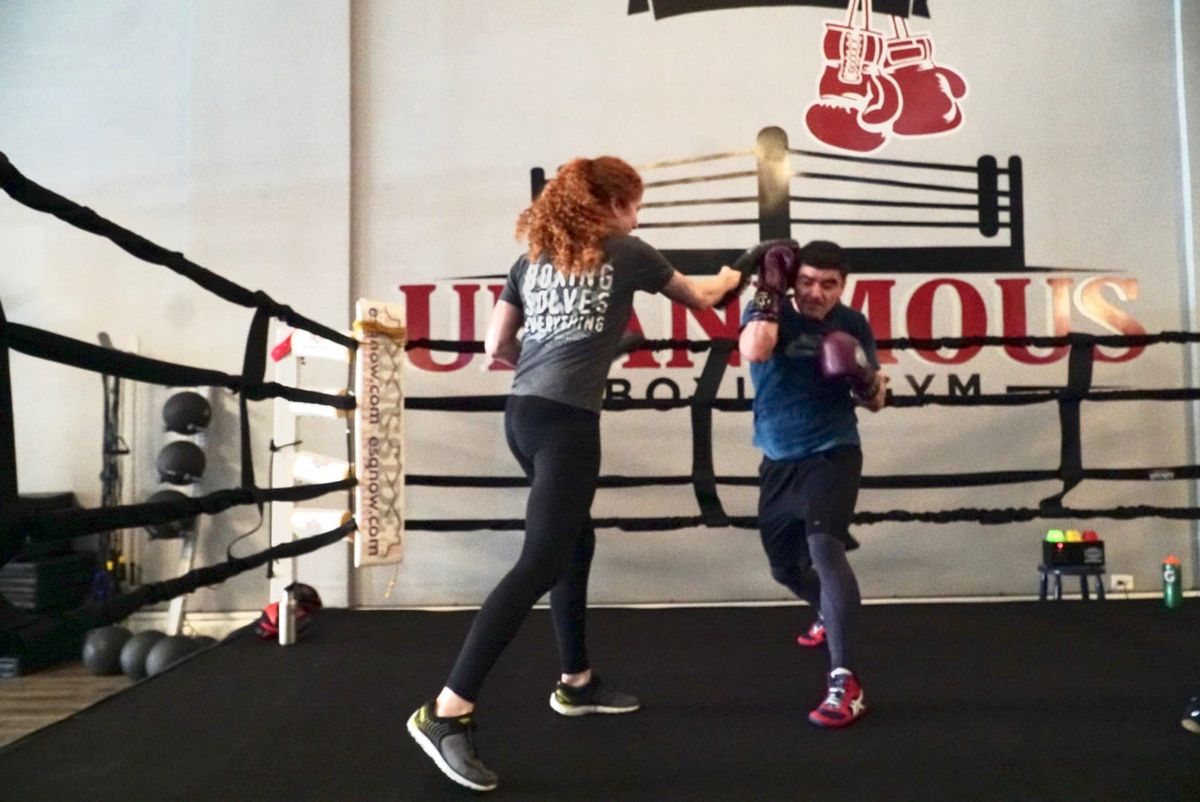
I learned this firsthand. There was a fighter I boxed four times. She was around six feet tall, so naturally, her comfort zone was staying on the outside and using her reach. Because we had already shared a ring three times, the coaches around me developed a concrete game plan based entirely on the assumption that she would stay on the outside. It made perfect sense on paper.
But for some reason, I had an inkling she wasn’t going to do that. I didn’t have a data-driven reason; I just had a feeling.
Fast forward to the fight. Within the first 30 seconds, she completely abandoned her usual style. She stayed on the inside, refused to move back, and did the exact opposite of what my coaches predicted—but exactly what my gut told me she might do. Because I wasn't married to a rigid script, I adapted immediately. I adjusted my strategy, moved to the outside, and won the fight.
When I talked to her later and asked why she changed her entire game, she told me she was dealing with knee issues. She couldn't move the way she normally did, so she decided her best bet was to stay close and exchange with me.
Planning for the Human
While planning for a specific opponent works sometimes, it fails the moment reality shifts. What you can always plan for, however, is your opponent being human.
Humans have bad days. Humans get injured. Humans get better. A human can wake up one morning and decide they want to change everything about their life, including their boxing style.
This is why Commander’s Intent is so brilliant.
Instead of a coach telling you: "You are going to move forward with a double jab, slide in with a straight back hand, and land a devastating hook," (which is highly specific and easily disrupted), they generalize the objective: "You are going to be the aggressor, distract, and line up your shots."
This shift gives you the ultimate weapon: Agility. If you box with the intent to attack rather than a script of punches, your feet will naturally align themselves for the appropriate angles based on how they actually defend. If your opponent refuses to back up and charges forward instead, your intent doesn't change—your execution does. You let them come in, distract with the jab, and angle to line up your shots.
The Agony of Creativity
I train many people who constantly beg for specific punch combinations. They want the comfort of a script. But that is simply not how boxing—or reality—works. You have to react to a living, breathing human who can pivot at any moment.
In my experience, what frustrates fighters most about Commander’s Intent is that not knowing exactly what you are going to do requires immense creativity and in-the-moment strategy. It forces you to abandon the safety of a checklist and actually trust your instincts.
The Life Lesson: Stop Scripting Your Life
We do this exact same thing outside of the gym. We script our lives down to the exact combination: I will take this job, get this promotion by year two, buy this specific house, and everything will go according to the tape I’ve played in my head. Then, life hits us in the face.
The economy changes. A health issue pops up. A relationship shifts. Suddenly, the opponent in front of us isn't playing the role we wrote for them, and we freeze because our "plan" didn't account for reality.
The Lesson: Stop writing rigid scripts for an unpredictable world. Adopt Commander's Intent for your life. Define your high-level objective—whether that is to be financially resilient, have a successful career, or to prioritize your health—but leave the daily combinations completely open to adjustment.
When you stop fighting the reality of change, you unlock your internal strategy. You stop panicking when life moves inside, and you start looking for the angle to land your shot.