My Brain Did It
March 29, 2026 🥊 Training the Signal

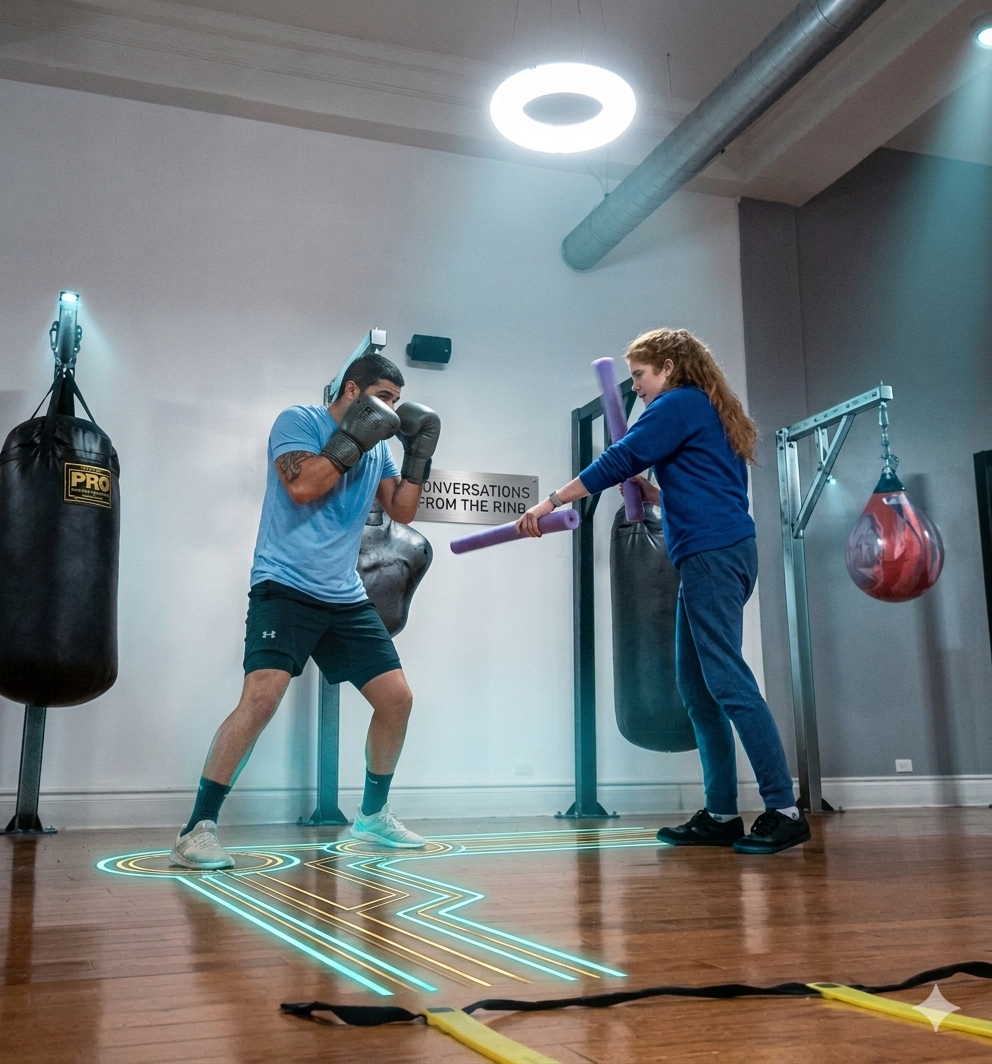
I was training a client the other day and gave him a specific combination: 1-2-step-2-3-2. He threw the 1-2, and I moved the stick to prompt the step. He made a tiny movement to the side—barely a shuffle—and then fired the 2-3-2.
I stopped him. "You didn’t take the step."
He looked at me with total sincerity and said, "My brain did."
It was comical, but it points to a common phenomenon in the gym. We think we tell our body to do something and the signal just travels. But many times, we tell our brain to move, and... nothing happens.
The Efficient Survivor
Your brain is smarter than you are when it comes to survival. If you are exhausted, your brain’s primary job is to conserve energy. If moving wastes energy and it doesn’t feel the necessity of it, the signal simply won't fire. In my client's case, his brain knew I wasn't actually going to hit him. It "protected" him by staying still.
I’ve been there. I remember being in the corner during a fight, absolutely spent.
My coach said, "When she does this, I need you to step right."
Me: "That’s not going to happen."
Him: "What do you mean? Just step right!"
Me: "I’m not going to step right. What else you got?"
I wasn't being difficult; I was being an organism trying to survive. Yet, the next round, I did it. I didn't "think" my way into it. My brain heard the instruction "step right" and performed it because it was the most efficient way to show skill to the judges and survive the round.
We Are Not Machines
Our bodies are not efficient machines; they are efficient organisms. Machines do what they are programmed to do until they break. Organisms adapt to stay alive. It’s why you can roll your ankle in the middle of a street with a truck hurtling toward you and not feel the pain until you reach the sidewalk. Your brain delays the pain signal because it knows it is better to run on a broken ankle than to get hit by a car.
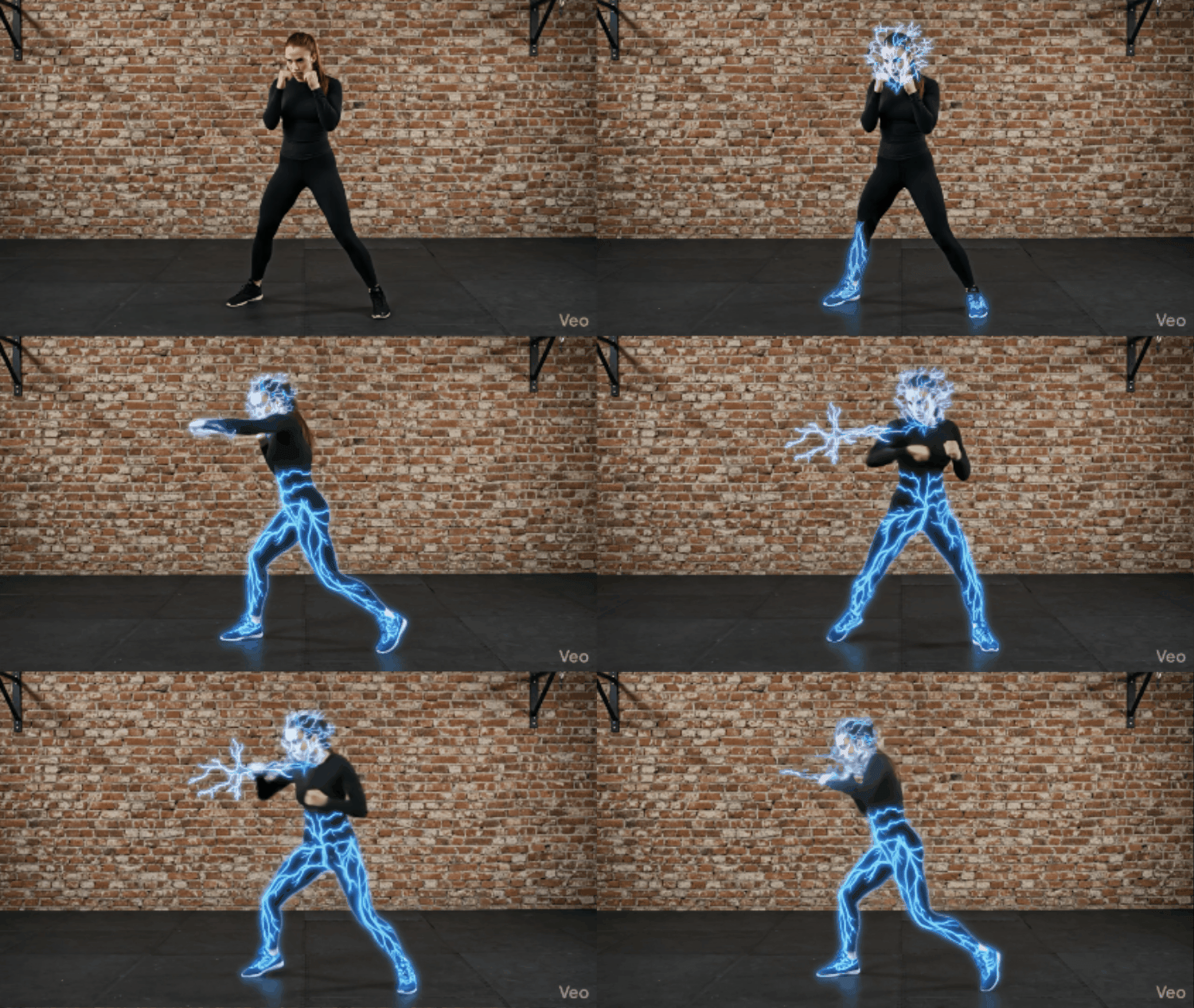
Training the Signal
To trust your brain to do the right thing when the pressure is high, the training has to already be in place. In a fight, adrenaline takes over. If you haven't built the neuromuscular endurance during the low-stakes hours of training, your brain won't have a "step" to call upon.
In training, your brain is lazy because it’s safe. It encourages you to slow down and skip reps because it wants to save that energy for a real emergency. But if you listen to it, you are teaching your brain that "staying still" is the default. You have to train the signal when it’s easy, so your organism knows how to move when it’s hard.
The Life Lesson: Build the Endurance
We all have things we "plan" to do—redecorate the living room, start that project, finally read that book. We "step" in our minds, but our feet never move. Why? Because there is no "truck" hurtling toward us. There is no threat, so our brain chooses the most efficient survival strategy: doing nothing.
How do you train the signal to actually move? You start small to build the neuromuscular endurance:
- Force yourself to read one page every night. Not a chapter—just a page. Do it until the first thing your hand reaches for at night is the book, not your phone.
- Show up to that coffee date. Even when you're tired, even when you want to cancel. Do it so you don't build the habit of canceling on something bigger later.
- Lay out your gym clothes the night before. Eliminate the "decision" so the signal to move is already halfway sent before you even wake up.
- Set a 5-minute timer for a chore. Tell your brain you'll only do it for five minutes. Often, once the signal is sent and the feet are moving, the "efficiency" of staying still is broken.
Don't wait for a crisis to find your movement. Train the signal in the quiet moments, so that when life demands a "step right," your body doesn't even have to ask permission.